
This is the fifth and final Slice of a 5-slice Random Treasure blog post. I have been reporting on my findings from an investigation into a loaf of bread which won first prize in a home-baking competition held in St Bees, Cumbria in August 1907.
Slice 1 was about The Prize Competition, Slice 2 was about The Prize, Slice 3 was about The Prize-Giver and Slice 4 was about The Prize Loaf. We come at last to the final slice, Slice 5: The Prize-Winner.
Slice 5: The Prize-Winner
A newspaper report cited early in Slice 1 of this post supplied the news that a Mrs J J Taylor had won the handsome first prize tea service at the St Bees show on 9th August 1907. But who was Mrs Taylor? Further research in other local newspapers provides the names of winners of identical prizes at some of the other shows held that summer. Three of the names were intriguingly accompanied by a hint as to their home locations:
- Kirkbride Show: Miss Maggie Wood, Whitrigglees
- Aspatria Show: Miss E Graham, Mirkholme
- Cockermouth Show: Mrs Renwick, Bassenthwaite
Could these details help to identify some of the prize-winning ladies? I tried, Random Treasure blog readers, I really did try to find out who these ladies were, where they were from and what was their station in life. But regrettably I couldn’t find out much to satisfy your curiosity. A few hours spent searching the www.ancestry.co.uk website met with very little success. Too many Taylors in and around St Bees in 1907. No identifiable Graham at Mirkholme, or Wood at Whitrigglees – both of which are localities containing a number of farms and residential properties.
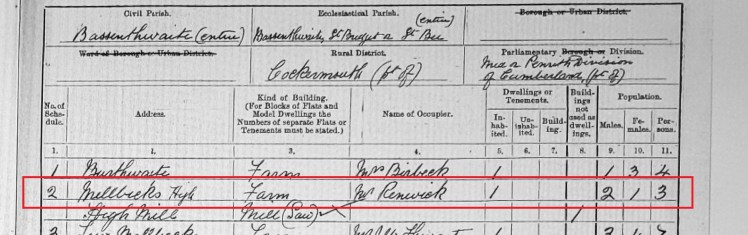
The nearest I came to a hit was at Bassenthwaite, where a Mr Renwick is listed in the 1911 Census at Melbeck’s High Farm – which might (or might not) be the building listed here. But to verify this, much more research time would be needed. Might there be some records pertaining to the Renwicks of High Melbeck’s in local directories or in church records or in other locally-held archives? Would it help to make a field trip to Bassenthwaite in search of Renwick relics?
Possibly, but this is a blog and not a dissertation for a higher degree in sociology. The effort required for an uncertain outcome of questionable value is altogether too much for your tired, elderly blogger. Sorry, readers, I have let you down.
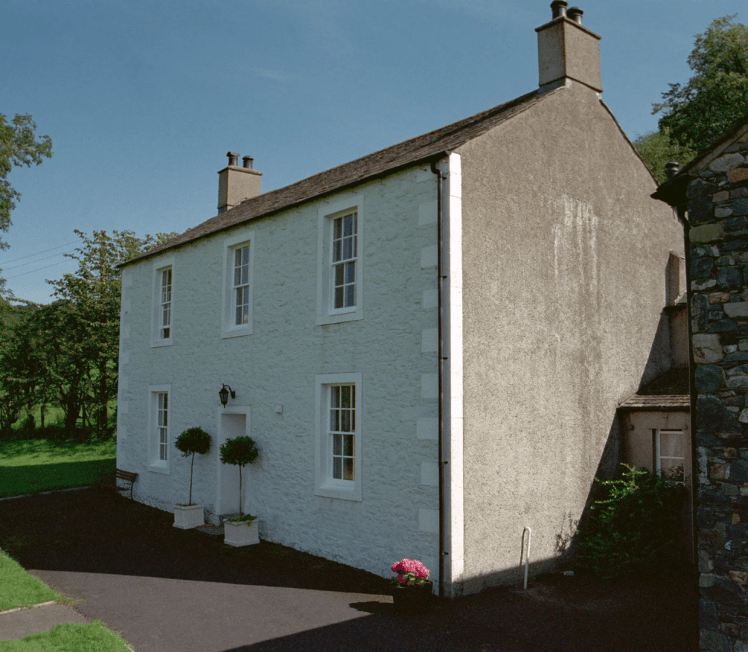
© Mr Roland I. Harries. Source: Historic England Archive
Nevertheless, it might still be possible to address unanswered questions about the prizewinning ladies in a less specific way. If I can’t find out exactly who they were, can I at least make some general observations about them?
For example, is it indeed appropriate for me to presume to refer to them as ladies, or should I be calling them women? Moreover, were all the entrants to the baking categories persons of the feminine persuasion, or did men also compete? Did they bake their loaves in the kitchen of a rural farmhouse, a country mansion, a town villa, a village cottage, or a non-domestic setting? Did they transport their precious exhibits to the show in a horse-drawn cart or a carriage or a new-fangled motor vehicle or on Shanks’s pony?
For starters, I can affirm that entrants to the baking competitions were not exclusively female. At Cockermouth, Mr H Todd and Mr P F Aughey, both from the Industrial School, won Second and Third Prizes respectively. But from all the lists of winners that I have pieced together from reports of the various 1907 Cumbria baking contests, only these two names out of a total of 20 belong to men.
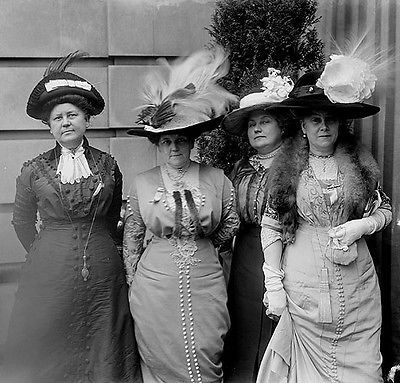
As to the question of ladies or women, it is necessary to tread carefully. We need to bear in mind that life in rural and small-town England in the Edwardian era was highly constrained by the overarching power of the class system. In big industrial cities, socialism, trades unionism and the women’s suffrage movement were getting an early grip, but here in Cumbria, it’s probably safe to say that every woman (and lady) knew her place.
Mixing on equal social terms between ladies of the upper classes and women of the working classes was virtually unthinkable. As for those of the middling sort – farmers’ wives, shopkeepers, artisans’ wives, dressmakers, milliners, schoolteachers – they might be patronised by their betters, and might in turn patronise those lower in the pecking order, but almost without exception everyone recognised everyone else’s social status down to the smallest fraction of distinction within the hierarchy.
And yet, did they perhaps come a little closer together on that one special day of the year: the day of the local agricultural and flower show, strolling through the marquee admiring the prize flower arrangements and prize fruit and veg and prize home baking? Did the local landowner’s wife or vicar’s wife compete on level terms against the wives of the village grocer, the publican, the tenant farmer, the wheelwright, or against women in service and the wives of gardeners, labourers and farmhands? Let’s examine the evidence.
We are back in St Bees on Friday 9th August 1907, where we started out on this journey of annual show discovery. Perhaps we can gain some insight into the divisions of society by looking at the categories and classes of competition, as reported in The Whitehaven News published on the following Thursday.
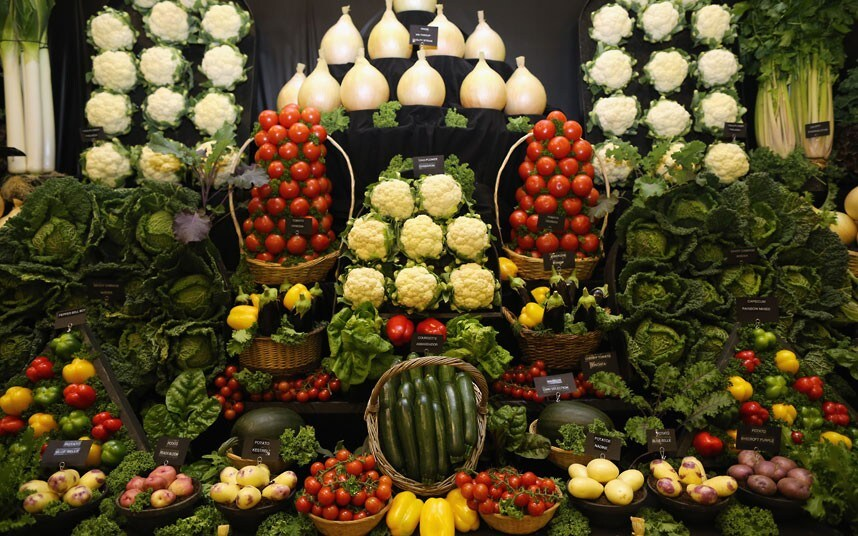
The Sections. The various categoties of produce for judging were divided into Sections as follows:
- Garden (Plants in Pots, Cut Flowers, Vegetables, Fruits)
- Farmers
- Butter, Eggs and Honey
- Wild Flowers
- Bread and Cakes
- Terriers
- Pigs
- Cottage Gardens
- Specials, including: Heaviest Vegetable Marrow; 12 Roses (not less than 6 dissimilar), Collection of Vegetables (8 distinct kinds) etc., etc.
The Competitions. Within many of the sections, entries could be submitted into separate Competitions in these classes:
- Open
- Professional
- Amateurs
- Cottagers
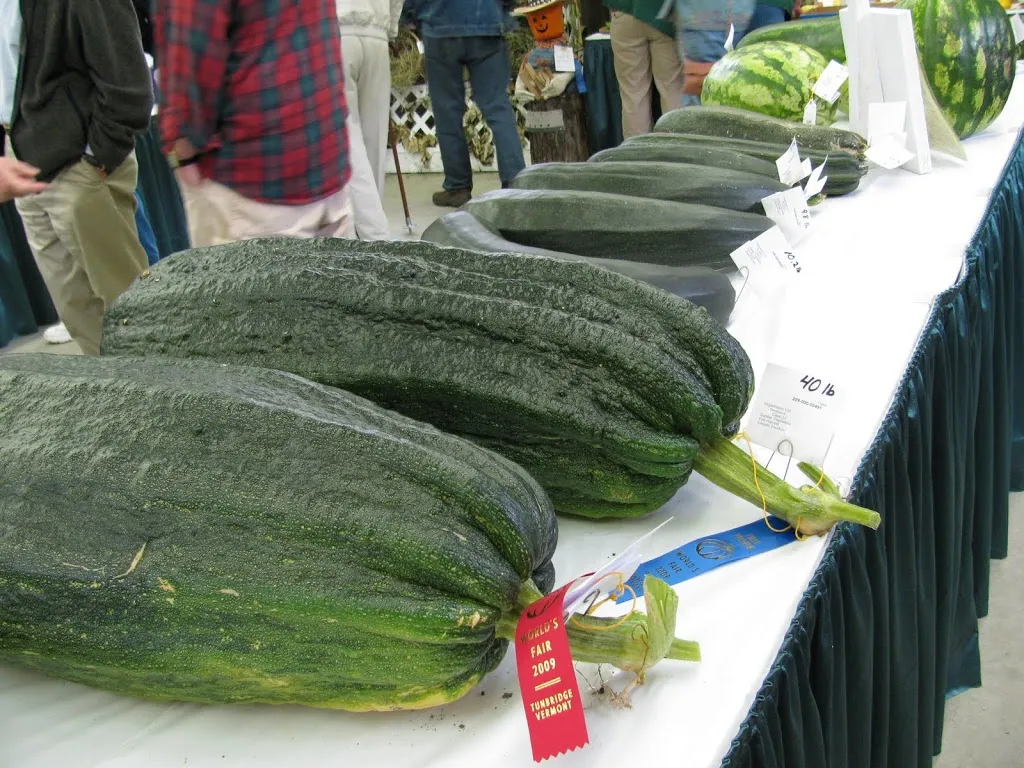
The Prizes. The Handsome China Tea Service awarded for home-baked bread was one of a very few prizes in kind. Another was a Pair of Pictures for the Heaviest Vegetable Marrow. Almost all other prizes were in cash. For example, in most of the gardening competitions, the first prize was 3 shillings, second prize 2 shillings.
Clearly no-one expected to get rich from exhibiting at the St Bees annual show, but since it attracted 660 entries, there must have been other compelling reasons for maximising the weight of your marrow or the varieties of your roses. If it wasn’t for the money, then could it be that the fierceness of competition was motivated by ambition? Ambition for status, for reputation, for glory and for prestige within the local community?
I can’t find documentation which defines the distinction between the terms Professional, Amateur and Cottager, but I’d hazard a guess that they reflect in some way the strict stratification of rural society in Cumbria (and doubtless elsewhere). Perhaps Professional signified the farmers; Amateur signified the clergymen, solicitors, teachers and their wives in respectable villas; and Cottager referred to the peasantry. Each in his and her settled place, competing within but not between their social class boundaries.
It is interesting to note as an aside that the winner in the Open competition for a Group of Six Apples is reported as “Rev R H Snape (gardener, L Parr)”. So here we have credit given to a gentleman clergyman for fruit grown by his servant. I wonder how the prize of 3 shillings – negligible to Rev Snape but of significant value to Mr Parr – was divvied up between them?
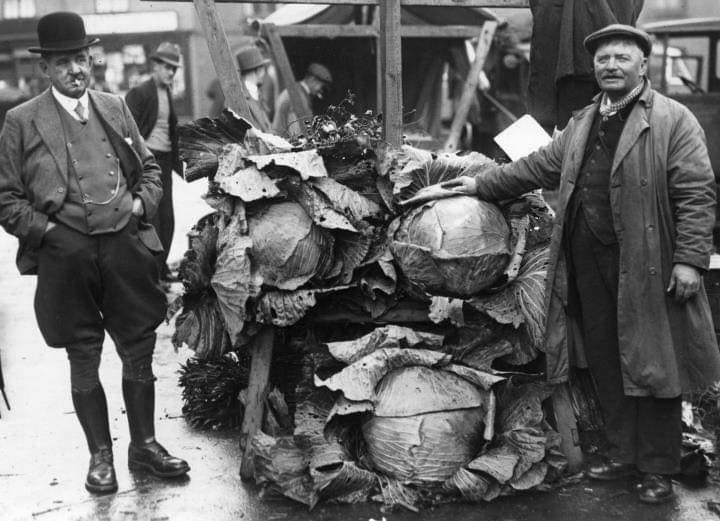
There’s no question that all classes were present at the show at the same time. They listened to the speeches and the brass band together, they applauded the prizewinners together, and they promenaded alongside each other admiring the prize exhibits arrayed on the tables. But was the show a rare opportunity for a democratic, classless coming together of all strata of local society? I think not.
Much more research is needed to discover details of the various prizewinners and the prize structure. But sadly not by me. I have taken this particular strand of my enquiry as far as I’m prepared to take it. I was hoping to find a good selection of published photographic images of people attending the 1907 shows to make an analysis of their attire and bearing in support of my contention that the classes did indeed mix physically but not socially. Could I, perhaps, find an aerial photograph to compare (for the women) gradations of flowered and beribboned hats, or (for the men) distinct groupings of top hats, bowler hats and flat caps?
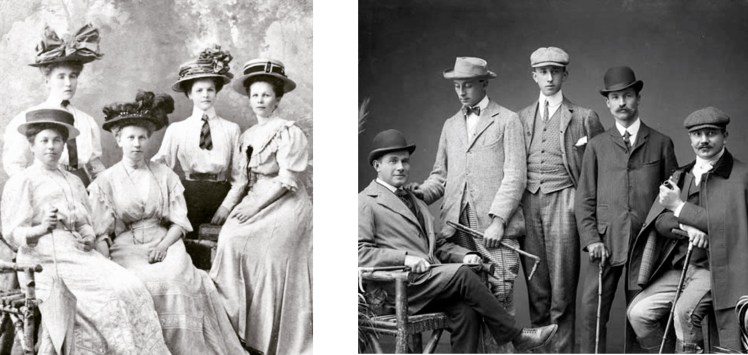
But the photographic record appears to be surprisingly thin and it seems that although the shows were reported fulsomely in the local newspapers, accompanying press photographs are practically non-existent. Smart phone cameras, drone photography and Instagram wouldn’t come along for another century. So I’ve reached the end of my loaf.
Just a couple of crumbs of final thoughts remain on the fancy plate upon which the Prize Loaf has been exhibited. First, can we bring the prizewinners and the prizes together? What did Mrs Taylor and the other winners of the Handsome Tea Services think about their prizes? Did they treat them as rare, priceless treasures reverently to be stored untouched in the back of the sideboard? Or were they reserved for special use with guests in front parlour? Or were they used and abused daily and casually in the kitchen or sitting room? Or were they put away in the attic and forgotten? Frankly, your guess is as good as mine. Or probably better.
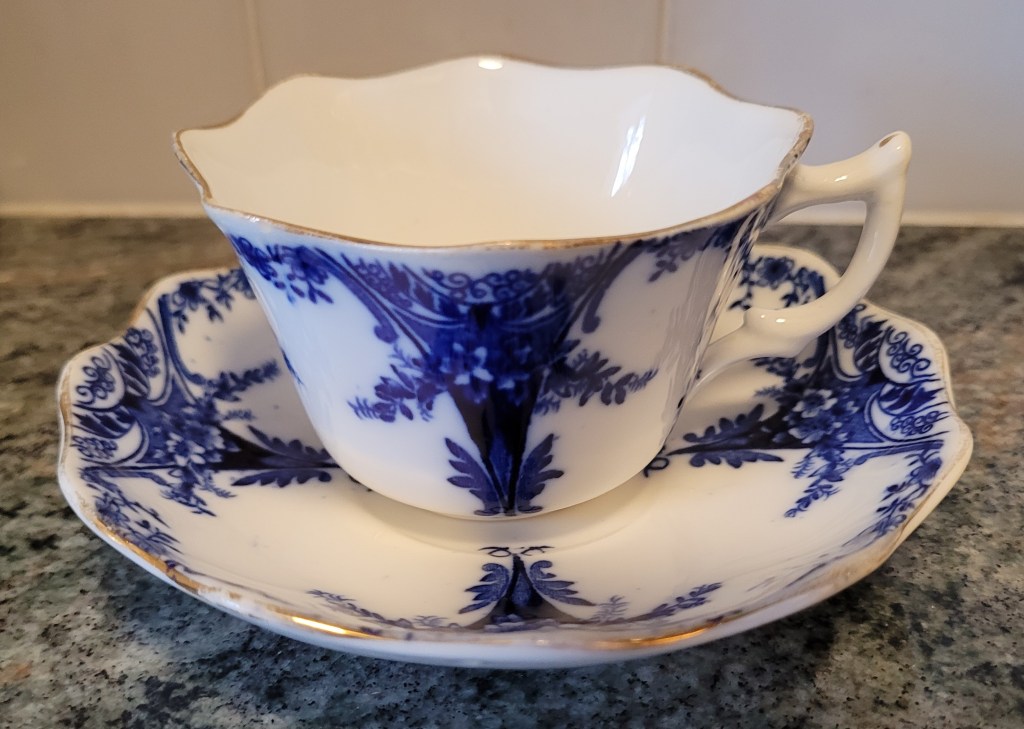
And, last crumb and last question of all: how on earth did two cups and two saucers from one of these prize tea services end up 119 years later in perfect condition in an Edinburgh charity shop? No idea. Sorry.


Tarnation! I knew I would regret selling that lovely glass with silver plated lid and handle biscuit box. Unless Carr’s made a habit of presenting biscuit boxes as prizes then I am afraid that the second prize biscuit box left the country about three years ago. If my memory recalls it properly, I believe it went to Canada. There was a relevant inscription on the lid. I can’t even find a photo to prove my claim but I could draw what it looked like if necessary. Jos.
LikeLike
Oh Jocelyn, I would very much like to see a photo of your biscuit barrel! Was it the Silver Plated Biscuit Barrel awarded as third prize in 1906, or was it the Handsome Silver Plated Biscuit Barrel awarded as second prize in 1907? Or was it a different prize in a different year, because the 1906 and 1907 descriptions don’t mention glass? A mystery which demands a solution. A special investigative trip to Canada might be in order.
LikeLike