
This is Slice 4 of a 5-slice Random Treasure blog post, reporting findings from an investigation by your blogger into a loaf of bread which won first prize in a home-baking competition held in St Bees, Cumbria in August 1907.
Slice 1 was about The Prize Competition, Slice 2 was about The Prize, and Slice 3 was about The Prize-Giver. This Slice 4 is about The Prize Loaf, and is followed by the final slice, Slice 5: The Prize-Winner.
Slice 4: The Prize Loaf
Assuming that you have read Slices 1, 2 and 3, you know by now about the Prize Competition, about the Prize, and about who awarded the Prize. And now I’m assuming that you are eager to hear about the Exhibit which won the Prize.
It was a Home-Baked loaf of bread. But what kind of loaf? Let us investigate. Or perhaps speculate.
I have discovered no small print, no stipulations, no restrictions, no terms and conditions, no specifications defining the loaf which is eligible to be entered into this particular prize category of the home baking section of the annual show. Just one requirement: in order to enter your loaf for judging, it must be made using Carr’s CC Flour.
Should we thus envisage a round, domed cottage loaf? An item that we would label today as a Farmhouse Loaf? A rectangular loaf baked in a tin (what we in Scotland would call a pan loaf)? A bloomer? A baguette?
Would a prize-winning loaf of 1907 match up with today’s imagined ideal of retro artisanal bread – rough, peasantish, bursting with wholegrains, fibre, wheatgerm, sourdough, and instagrammability? Or would the Edwardian home baker be striving for smoothness, whiteness, softness, and the closest possible approximation to what we now think of as cheap non-nutritious supermarket white bread?
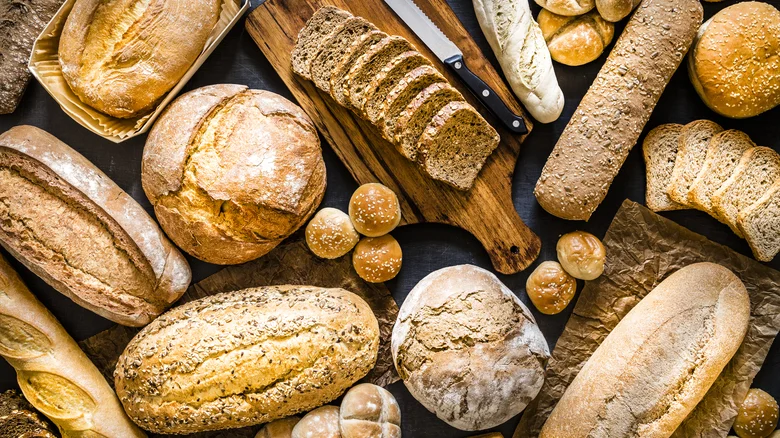
One thing we know for certain is that we’re talking about a white loaf because Carr’s CC brand seems to have been a refined premium quality white flour. But what kind of yeast was used as the raising agent? Where did the prize-winning baker find her recipe? Did she bake her loaf in the morning of the show or on the day before? Did she bake it singly or as part of a batch from which she selected the best specimen?
Did she bake her loaf in a coal- or wood-fired range oven, or a gas oven, or even an early electric oven? What decorative touches did she use to present it to the judges in the most eyecatching way? So many questions, so few answers. Just a few clues.
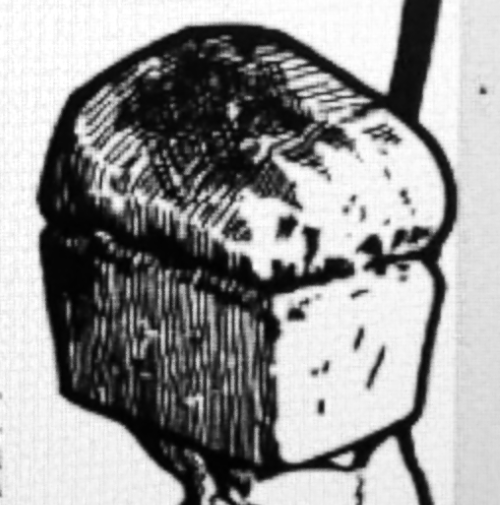
A clue as to shape. Here’s an advertisement from the Whitehaven News of Thursday 1st November 1906. It seems that the platonic ideal of a loaf as envisaged by the flour miller is rectangular, baked in a tin, with a crusty and beautifully raised top. I wonder if the exhibitors in the competition carefully followed this model or if there was any scope for the use of creativity and innovation?
No doubt there are still women and men throughout Britain who exhibit their bread in today’s local shows and who could answer this question, but I don’t know any of them to ask. Personally I think I’d maximise my winning chances by following the graphic in the advertisement as closely as possible.
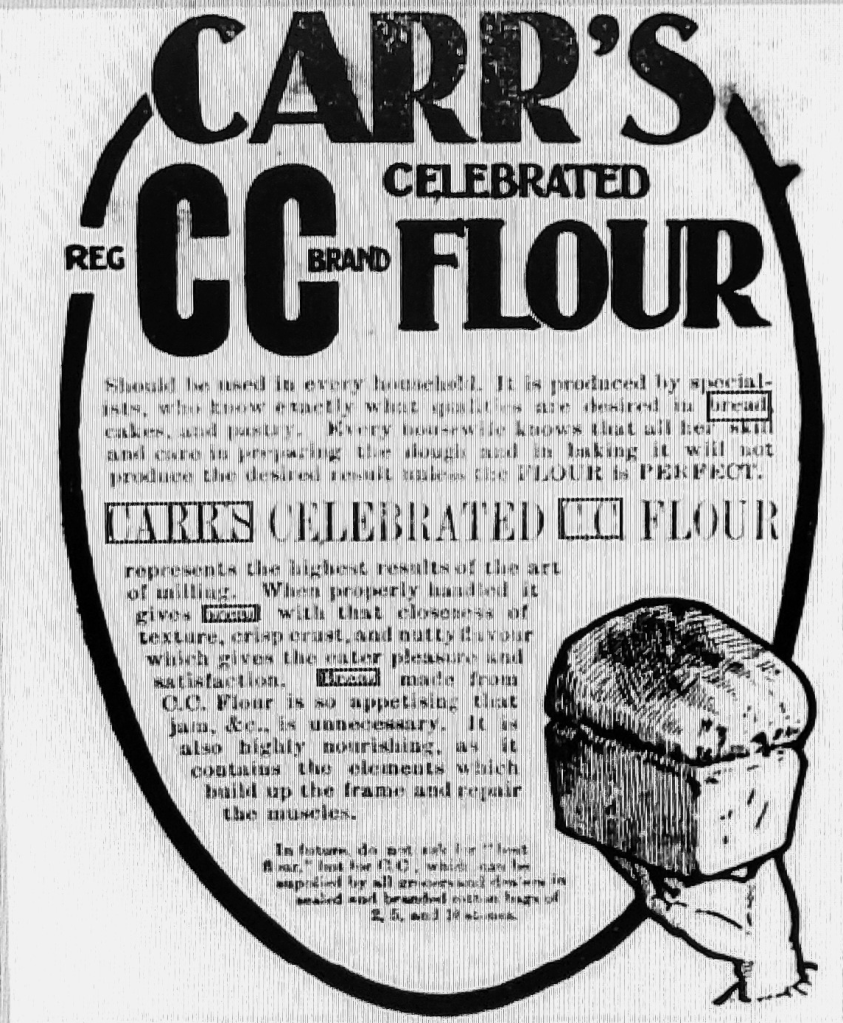
A clue to the criteria for judging. The advertisement above gives us an idea of what the judges are looking for in the winning loaf. The image quality is poor, so I’ll reproduce the text here. The Judges will be seeking:
… that closeness of texture, crisp crust and nutty flavour which gives the eater pleasure and satisfaction … so appetising that jam &c. is unnecessary … also highly nourishing, as it contains the elements which build up the frame and repair the muscles.
Some clues as to ingredients and method. As we’ll see in the next Slice, the home baking categories in the annual shows were highly competitive. For example there were 76 entries for the Carr’s prizes in the Kirkbride show on 8th August. So it wouldn’t be worth your while to enter unless you knew you could produce a decent loaf. We can probably assume therefore that most of the bakers making entries for the prize competitions would be much too experienced to need to consult a cookery book before starting.
Fortunately for us 21st century bakers or non-bakers, recipes from the time are available online to give us an idea of how the bread was made and what went into it. The Internet Archive has lots of them – in fact you can find digital reproductions of more than 12,000 complete cookbooks at this link.
Images are shown below of bread recipes from three books: from the redoubtable Mrs Beeton’s Book of Household Management (1907 edition), from King Edward’s Cookery Book by Florence George; and from Household Cookery Recipes by Mrs Rotheram.
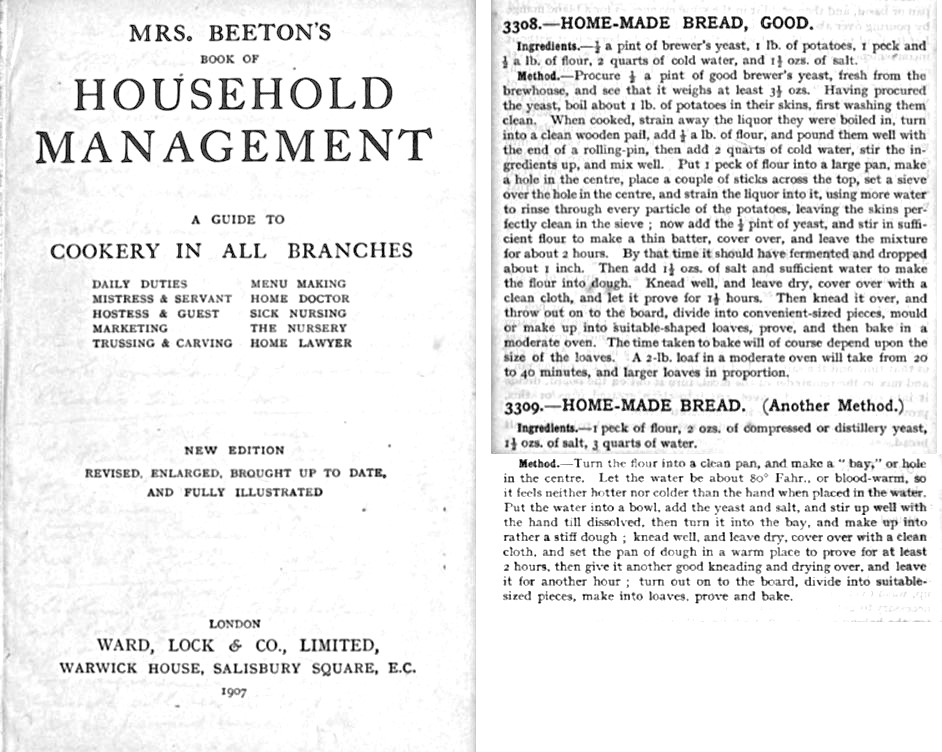
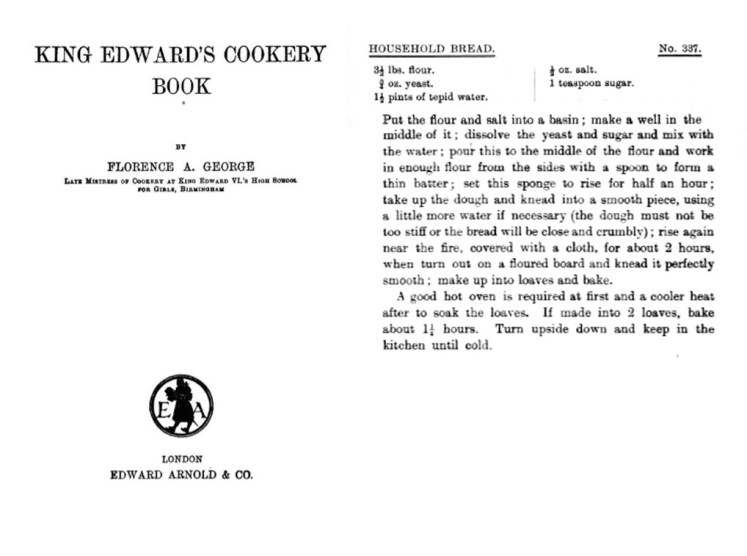
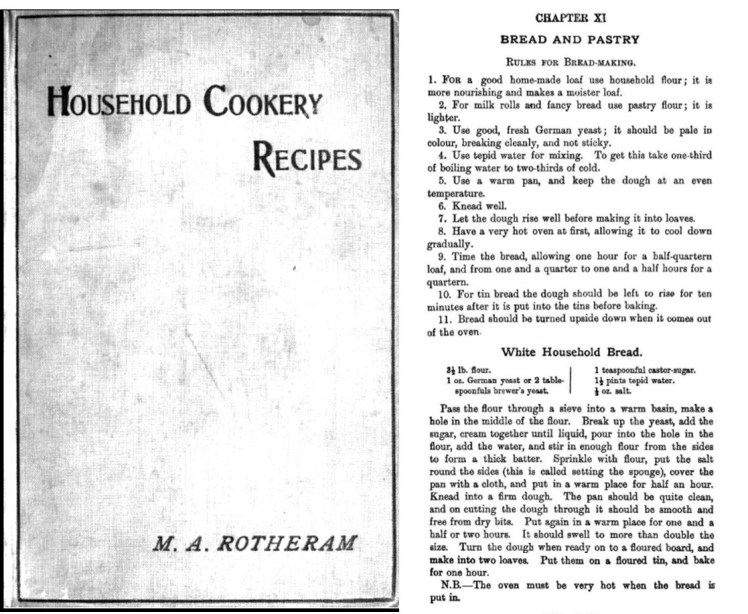
I’m including these recipes for your interest, but wouldn’t venture an opinion as to which might be the best pick for an exhibition loaf made using Carr’s CC Flour. Having said which, I might avoid Mrs Beeton’s first recipe which (bizarrely) includes potatoes among its ingredients.
And as for whether you should use German yeast or Brewer’s yeast or compressed or distillery yeast, I leave this momentous decision to your experience and good judgment.
Now that you know about the Prize Competition, the Prize, the Prize-Giver and the Prize Loaf (and how it was made and judged), it only remains to consider who won the Prize. It’s time to move on to Slice 5: The Prize-Winner.
 Random Treasure
Brewers yeast has a stronger flavour and is slower to ferment. I suspect that ‘German’ yeast was becoming more popular and available in powdered form at that time.
Today I suppose the difference would be between using a sour dough starter and the dried stuff sold in sachets.
My Victorian grandmother told me that after she married her mother in law visited once a week to show her how to bake bread, until she had perfected the technique. My mother (now 98) recalls looking forward to coming home on baking day so that she could enjoy a slice of fresh baked bread, slathered in butter and jam. She remember the rows of loaves lined up on the stone shelf in their cellar. As a baker myself, I feel that by the end of the week their bread must have been stale and not very pleasant to eat. I can’t imagine what my family would say if I offered them week old bread. Bear in mind that home made bread doesn’t contain the preservatives found in commercially available bread today.
Jos.
LikeLiked by 1 person